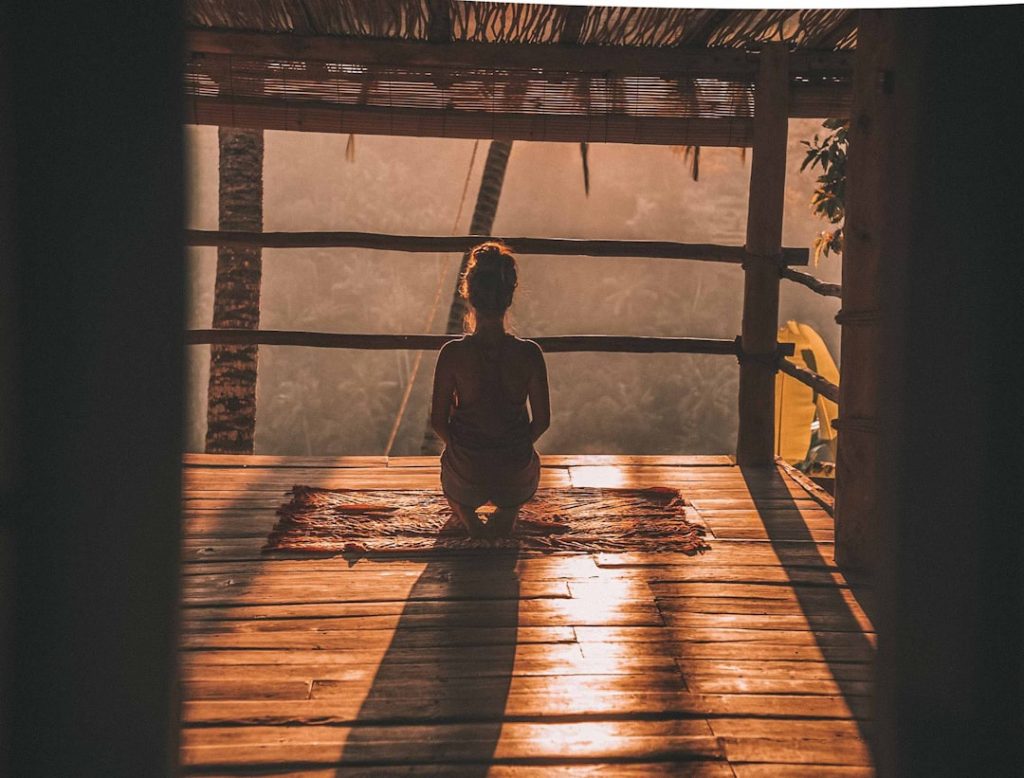
A retreat can sound vague from the outside. You know there will be yoga, food, rest, and time away from ordinary life — but the actual shape of the day is harder to picture.
That uncertainty is often what makes people hesitate. So here is the simple version: a good retreat day has rhythm. Not a rigid schedule that fills every hour, and not so much empty space that you feel lost. Enough structure to relax into. Enough quiet for the body to settle.
Morning gives the day a clear beginning
Most retreat days begin slowly. There may be tea, fruit, or a few quiet minutes before practice. The first session is usually the anchor: movement, breath, stillness, or some combination of the three.
This is not the kind of yoga where the point is to keep up. Some mornings might include slow flow or mobility. Others might be more restorative — floor-based shapes, longer holds, breath work, or yoga nidra. The purpose is to bring the body into the day without forcing it.
The important thing is what comes first. Not emails. Not logistics. Not decisions. The first signal the body receives is: there is time.
Meals do more than feed you
After practice, the day usually opens around breakfast. Meals on retreat tend to be slower than ordinary meals. People sit longer. Conversations start without anyone needing to force them. Some mornings are social; others stay quiet. Both are fine.
This is often how the group begins to form, especially for people arriving alone. You do not need a strategy for meeting everyone. The repeated rhythm of meals does that work gently. You see the same faces, pass the same food, ask the same small questions, and by the second or third day the room feels different.
If you are considering coming by yourself, read coming alone to a yoga retreat.
The middle of the day is part of the design
The free hours are not gaps in the schedule. They are part of the retreat.
Depending on the place and season, the middle of the day might include a walk, swim, local visit, bodywork, journaling, reading, or simply doing very little. In warm climates, this may also be when the body naturally wants shade and quiet. A good retreat does not fight that.
At first, the instinct can be to fill the space. Then the absence of demand starts to register. You take longer over tea. You lie down after lunch. You stop measuring the day by output.
That is not laziness. It is the nervous system beginning to believe the conditions have changed.
Afternoon practice is usually softer
Many retreats include a second practice later in the day. This is often gentler than the morning: yin, restorative yoga, breath work, meditation, or yoga nidra.
The afternoon session is less about waking the body and more about helping it come down. Several days of repeated cues — breath, warmth, steady meals, quiet, movement without pressure — can reach a different layer.
That is why rest is not an optional extra. It is part of the method. More on that here: yoga for the nervous system: why rest is part of the practice.
Evenings stay simple
Evenings are usually built around dinner, conversation, and a gradual lowering of the lights. Some nights may include a talk, fire, short meditation, stargazing, or a simple group check-in. Other nights need nothing added.
The best evenings do not try to recreate the intensity of normal life in a prettier place. They let the day finish. You eat. You talk if you want to. You step outside. You sleep.
You do not have to join everything
Optional means optional. If there is an afternoon walk and your body wants sleep, sleep. If there is a group conversation and you need quiet, take quiet. If you are new to yoga and a posture does not suit you, you rest or choose another shape.
A retreat is not a school camp. The point is not to become the most relaxed person in the room. The point is to notice what your system is asking for, and to have enough space to respond.
A simple daily rhythm
Every retreat is different, but a day might look roughly like this:
- quiet wake-up
- morning practice
- breakfast
- free time, swim, walk, rest, or local visit
- lunch
- quiet afternoon space
- restorative practice or breath work
- dinner
- simple evening, sky, sleep
The details change. The principle does not: structure at the edges, spaciousness in the middle.
If you are wondering whether this kind of pace would suit you, stay close as the 2027 retreat takes shape. Keep me in the loop ↗ — occasional updates, no pressure.
Image: Photo by Jared Rice on Unsplash.