
- Up to 4 min 39 sec totality
- 2 Aug 2027
- EU — no visa hassle
- Easiest to reach
The eclipse here
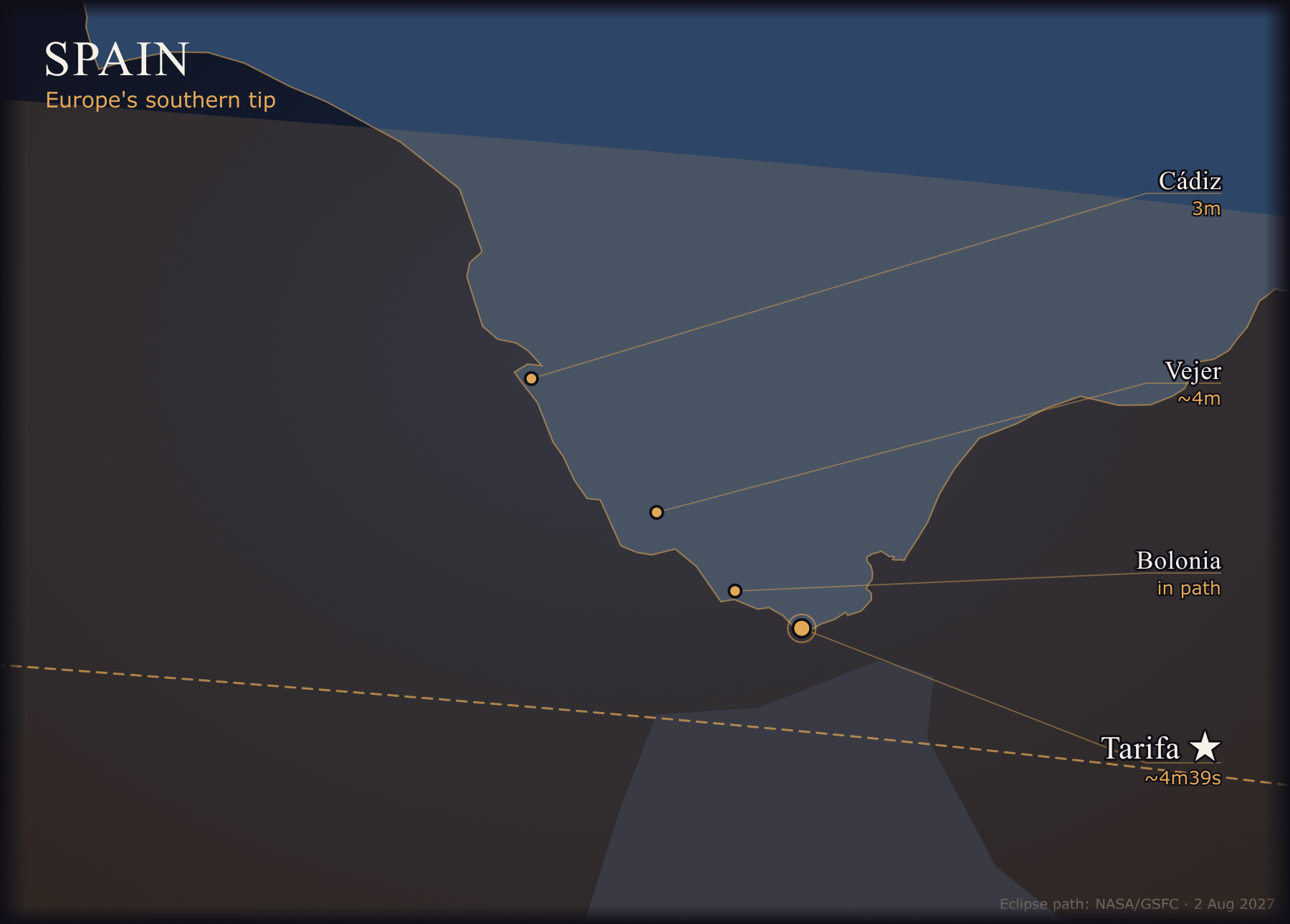
The 2027 path enters Spain at its southern tip — the province of Cádiz, the Strait of Gibraltar, and the cities of Ceuta and Melilla. Totality reaches about 4 minutes 39 seconds at Tarifa, mainland Europe's southernmost point (and 4 min 48 sec in Ceuta), but drops quickly inland — under 3 minutes at Cádiz, under 2 at Málaga. The best viewing is the southern coastal strip of Cádiz province. One caveat unique to Spain: this is the cloudiest of the four candidates on eclipse morning — a strong levante wind can push haze or low cloud across the Strait, and Tarifa is the windiest place in Europe — so an open, south- or west-facing coast or higher ground is the safer bet for a clear sky.
Where the shadow makes landfall in Europe
The eclipse touches Europe at its very southern tip — the province of Cádiz and the Strait of Gibraltar — before crossing to Africa. The shortest totality of the four, and by far the easiest to reach. Four places beneath it.
In the path · up to ~4m 39s
Tarifa & the Costa de la Luz
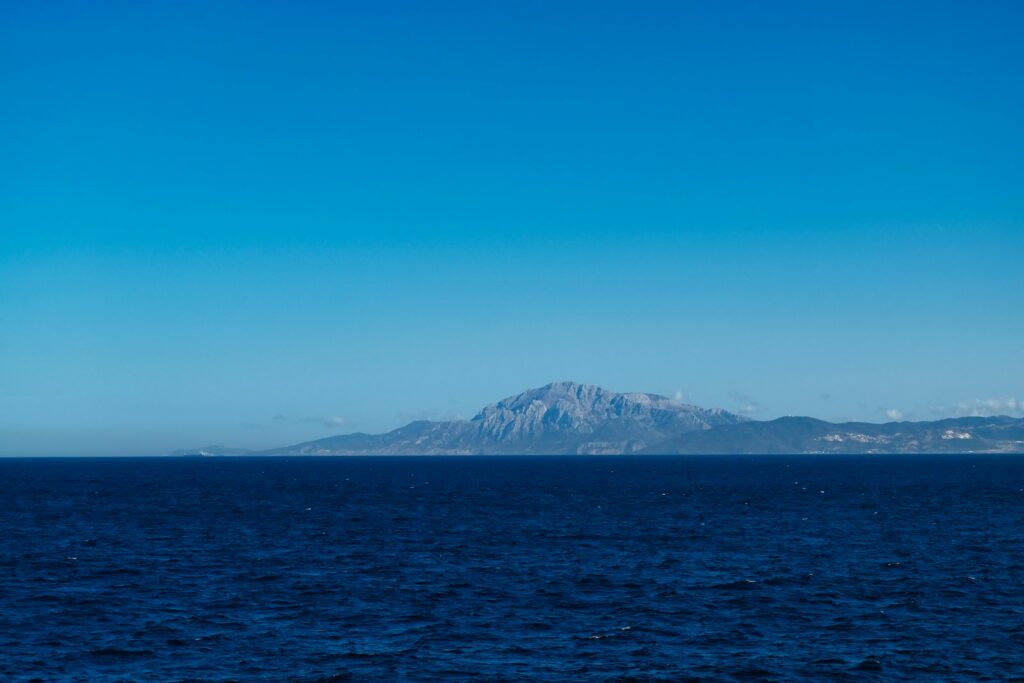
Mainland Europe’s southernmost point, where the Atlantic meets the Mediterranean and Africa stands clear across the water. Tarifa catches the best totality on the Spanish mainland — around four and a half minutes — with wide windswept beaches and an easy, barefoot surf-town feel.
Pueblo blanco
Vejer de la Frontera
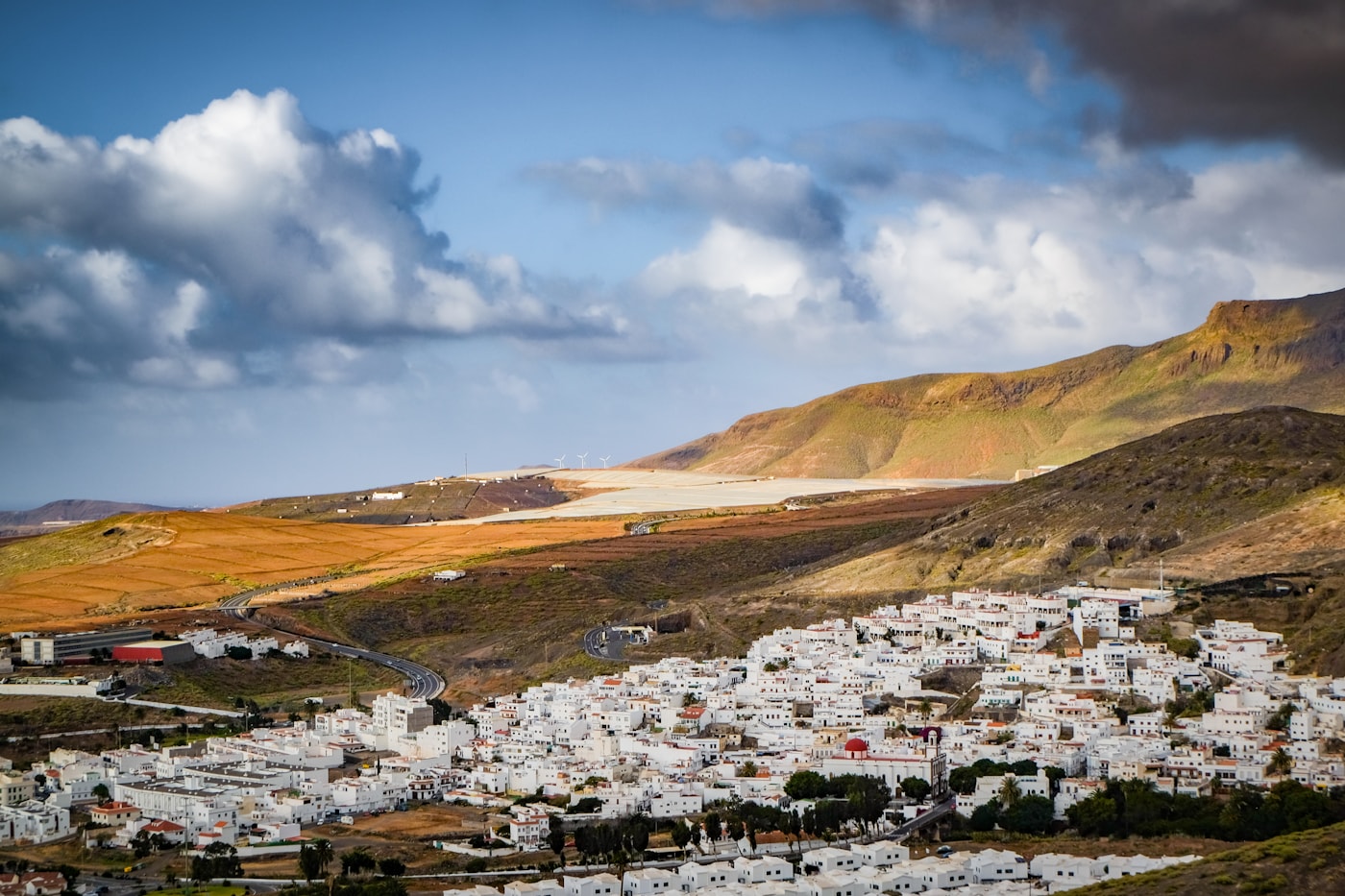
A white town stacked on a hill above the coast — Moorish lanes, jasmine, tiled patios and long views to the sea. One of Andalusia’s loveliest, unhurried and golden in the late light, and inside the path.
Roman ruins · wild beach
Bolonia & Baelo Claudia
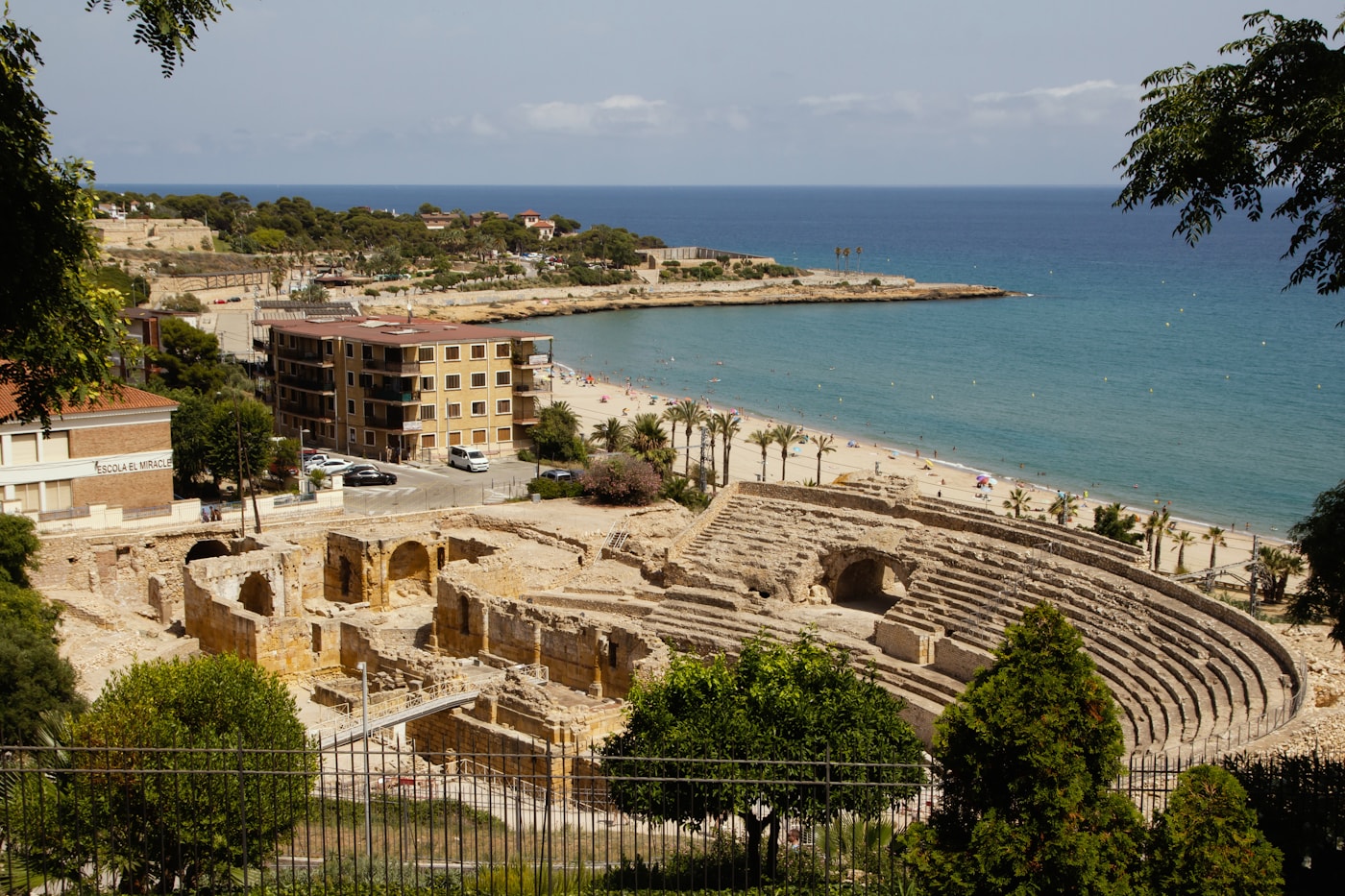
A whole Roman town — forum, temples, a fish-salting works — facing a turquoise bay and an enormous shifting white dune, on a beach that’s still half-wild. Antiquity and Atlantic in one frame, and squarely under totality.
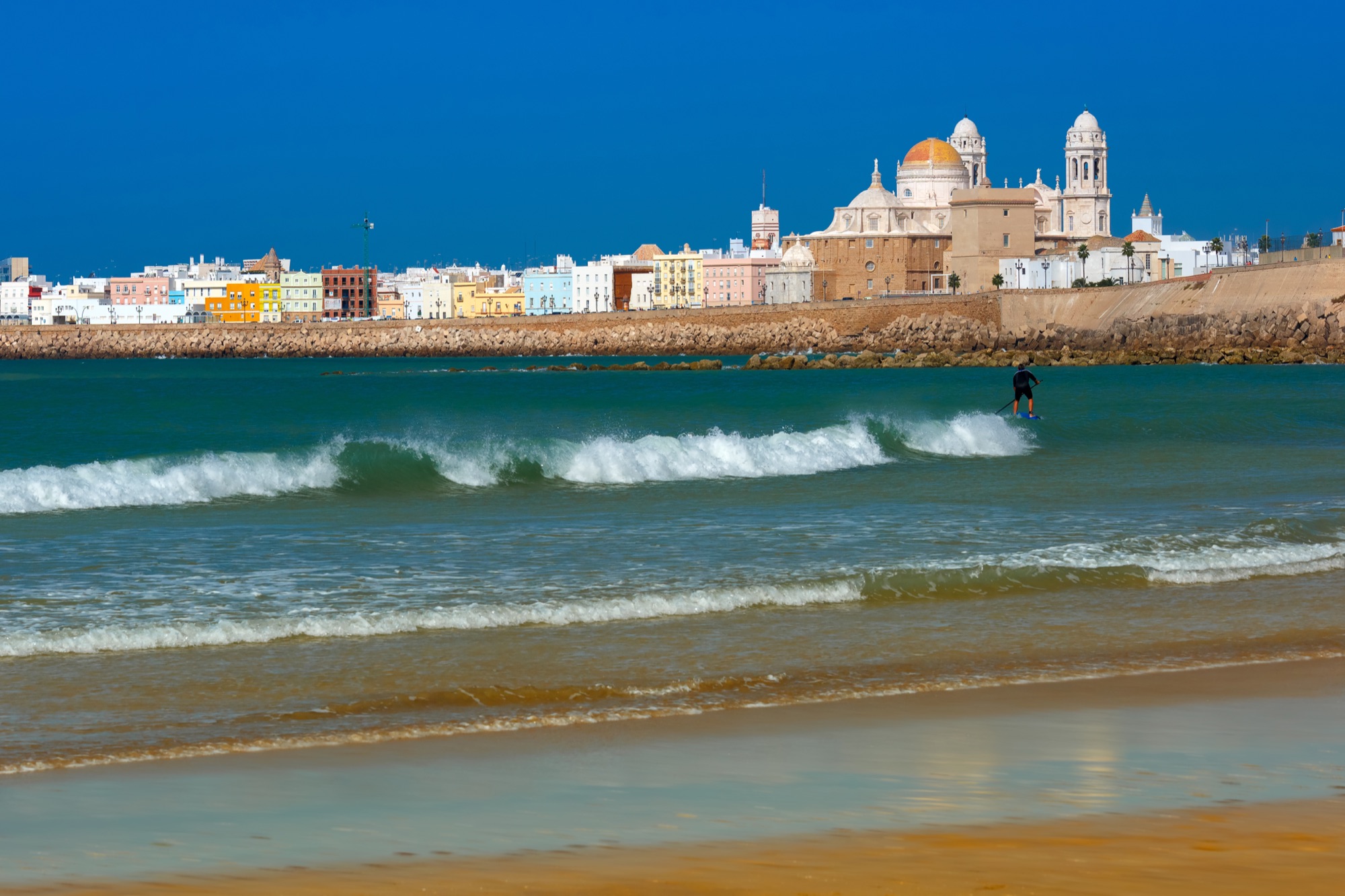
Europe’s oldest city
Cádiz
Founded by the Phoenicians some three thousand years ago, Cádiz is the oldest continuously inhabited city in Western Europe — sea on three sides, salt air, golden-stone streets and a famously open spirit. It takes a touch under three minutes of totality.
Knowing before you go
Getting there & ease
The easiest of the four by a wide margin. Fly into Jerez, Gibraltar, Málaga or Seville and the entire eclipse zone is a short drive within Cádiz and Málaga provinces — EU roads, EU healthcare, a deep and reliable hospitality industry. It’s also the only candidate we can simply drive down and scout in a weekend. The honest trade-off is that it’s the least exotic and the shortest totality; the case for Spain is certainty, not story.
Weather in August
Hot, dry and reliably sunny — the coast around 28–30 °C, tempered by the levante and poniente winds that make Tarifa a kite-surfing capital; inland is hotter. Rain in August is very unlikely. The one caveat for eclipse day: on a strong levante the Strait can carry haze or cloud, so the open coast and higher ground are the safer bets.
Food
Pure Andalusian: pescaíto frito (fried fish), red tuna from the traditional almadraba nets at Barbate and Zahara, chilled gazpacho and salmorejo, sherry from nearby Jerez, and a long, social tapas culture. Meals run late and easy.
Religion
Roman Catholic by deep heritage and largely secular in daily practice, with ferias and festivals threading through the year. No dress expectations beyond the obvious at a working church.
Culture
Andalusia at its most relaxed — flamenco, ferias, a profound Moorish architectural inheritance (the south was al-Andalus for eight centuries), and a rhythm of late dinners, sea breezes and slow afternoons. Familiar and welcoming to European visitors, while still entirely its own.
History
Phoenician Cádiz, Roman Baetica (Baelo Claudia), eight centuries of Al-Andalus, the Reconquista — the “de la Frontera” in so many town names marks that old border — and Cádiz’s starring role in the Age of Sail and Spain’s first constitution in 1812.
Languages
Spanish, in a soft, dropped-consonant Andaluz accent. English is spoken in the tourist towns but less than you might expect once you head inland — a little Spanish is warmly received and genuinely useful.
Money
The euro, of course. Cards and contactless work everywhere and ATMs are ubiquitous. Prices are moderate — cheaper than northern Europe, dearer than North Africa. Tipping is modest and optional, a little for good service.
Safety
Very safe; Spain is low-crime by international standards. The only real care is the ordinary kind — belongings on busy beaches, pickpockets in city crowds. Healthcare is excellent: Europeans should carry an EHIC/GHIC, everyone else travel insurance.
Good to know
- Dress — no codes; beach-casual is the coast’s default.
- Alcohol — freely available everywhere.
- Connectivity — excellent 4G/5G; free EU roaming for Europeans, a cheap eSIM for everyone else.
- Water — tap water is safe to drink.
- Wind — the levante can blow hard around Tarifa; wonderful for kitesurfers, worth a thought for eclipse-day viewing spots.
- Time zone — CEST (GMT+2 in summer).
- Rhythm — dinner is late, often 9–10 pm; shops may close for the afternoon.
Entry & visas
The simplest of the four. Spain is in the EU and the Schengen area: EU, EEA and Swiss citizens have freedom of movement, no limit. Citizens of the UK, US, Canada, Australia and New Zealand visit visa-free for up to 90 days in any 180. From late 2026, visa-exempt non-EU travellers will also need an ETIAS — a quick, cheap online travel authorisation, not a visa. Non-EU passports should be valid for at least three months beyond departure and issued within the last ten years.
| You’re from | Tourist entry | Official source |
|---|---|---|
| EU / EEA / Switzerland | Freedom of movement — no limit | National ID card or passport |
| United Kingdom | 90 days in any 180 (Schengen); ETIAS from late 2026 | gov.uk travel advice |
| United States | 90 days in any 180 (Schengen); ETIAS from late 2026 | travel.state.gov |
| Canada | 90 days in any 180 (Schengen); ETIAS from late 2026 | travel.gc.ca |
| Australia / New Zealand | 90 days in any 180 (Schengen); ETIAS from late 2026 | smartraveller.gov.au |
The Schengen 90/180 limit counts days across all Schengen countries combined, not Spain alone. ETIAS (a small online fee, free for under-18s and over-70s) is expected to become mandatory for visa-exempt travellers in late 2026 — check the official EU site, travel-europe.europa.eu/etias. This is a guide, not official advice — verify with the sources above before you book.
The honest trade-off
From the Journal

Victoria as a Solipse gathering place: summer light, coast and reset
Victoria is not the most exotic place Solipse could begin. That is part of its strength.

Tunisia on the path: Sahara, Sfax and a quieter route to totality
Tunisia sits on the 2027 eclipse path with a different kind of promise. It is less obvious than Egypt, less…
Totality: why the sky going dark changes the body’s sense of time
A total solar eclipse is often described as a visual event: the moon passes in front of the sun, daylight…